Q1: What is congenital anomaly surgery in newborns?
Congenital anomaly surgery corrects structural birth defects present at birth — such as esophageal atresia, intestinal atresia, anorectal malformation, and Hirschsprung disease — allowing the baby's organs to function normally. These surgeries are typically performed by a specialist pediatric and neonatal surgeon within hours to days of birth.
Q2: Which is the best hospital for birth defect surgery in newborns in Bangalore?
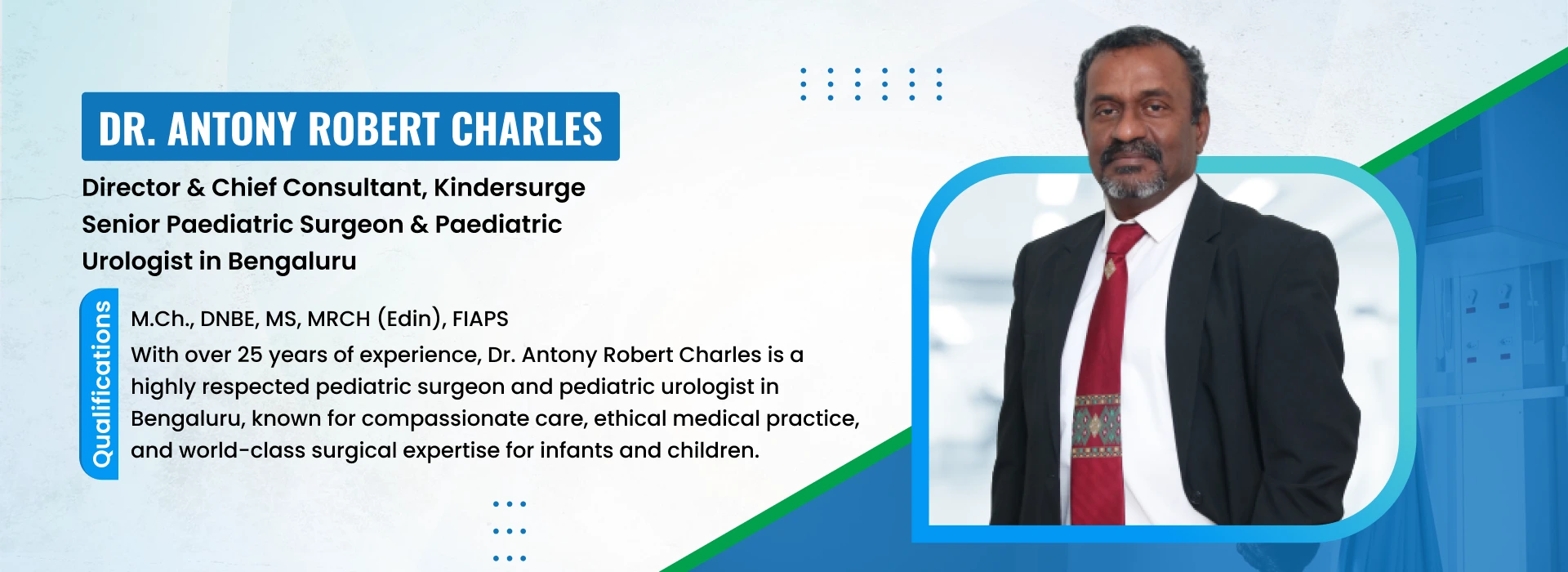
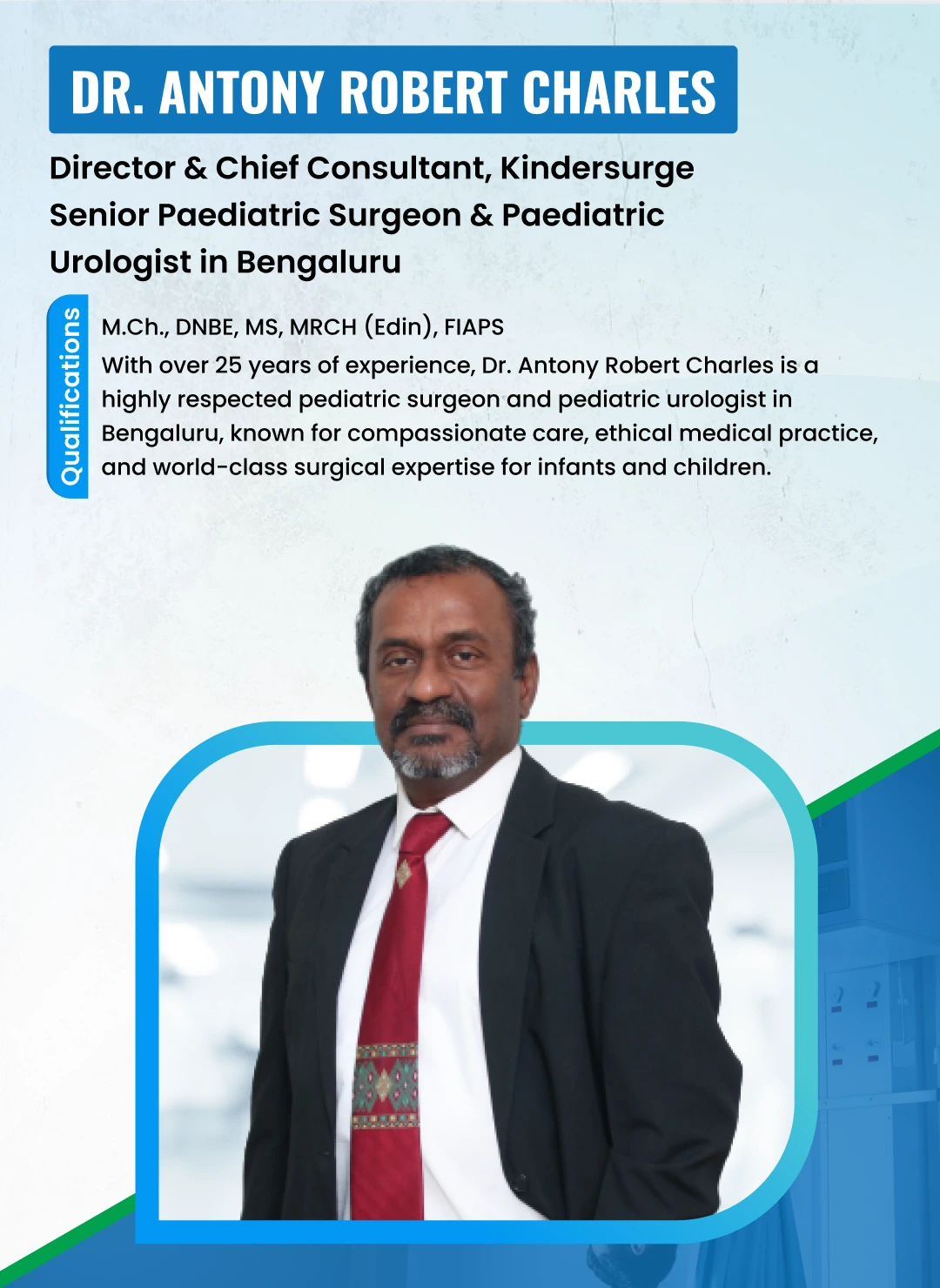
Families across Bangalore — including areas like Whitefield, Koramangala, Marathahalli, Hebbal, and Sarjapur Road — trust Dr Antony Robert Charles for neonatal and congenital anomaly surgery. He offers advanced minimally invasive surgical techniques, dedicated NICU support, and extensive experience with complex neonatal conditions.
Q3: Is esophageal atresia surgery successful in India?
Yes. With timely diagnosis and expert surgical repair, survival rates for esophageal atresia exceed 90% in otherwise healthy newborns in experienced centers. Early detection — often on antenatal ultrasound — and prompt referral to a specialist pediatric surgeon are the most important factors in a good outcome.
Q4: What are the signs of intestinal atresia in a newborn?
Signs of intestinal atresia include failure to pass meconium (first stool) within 24–48 hours, a swollen or distended abdomen, green (bilious) vomiting, and feeding difficulties. These require immediate pediatric surgical evaluation — do not wait for a routine appointment.
Q5: How soon after birth is Hirschsprung disease surgery performed?
Hirschsprung disease surgery (pull-through procedure) is typically performed within the first few weeks to months of life, depending on the severity. If the baby presents with Hirschsprung-associated enterocolitis (HAEC) — a serious infection — emergency intervention with bowel decompression or a protective colostomy may be needed first.
Q6: Can anorectal malformation be detected before birth?
Anorectal malformation (imperforate anus) is rarely detected on routine prenatal ultrasound. It is most often identified during the routine physical examination performed immediately after birth. The absence of a normal anal opening is the key finding. Associated anomalies (spinal, renal, cardiac) are screened for systematically after diagnosis.
Q7: What is the recovery time after congenital anomaly surgery in babies?
Recovery depends on the specific condition. Most babies with intestinal atresia or anorectal malformation are ready for discharge within 2–4 weeks. Conditions like esophageal atresia or congenital diaphragmatic hernia may require a longer NICU stay of 4–8 weeks or more. Dr Antony Robert Charles provides detailed, individualized recovery guidance to each family.
Q8: Is congenital anomaly surgery available near Whitefield or Koramangala Bangalore?
Yes. Dr Antony Robert Charles provides neonatal and congenital anomaly surgical services accessible to families across Bangalore — including Whitefield, Marathahalli, Koramangala, Hebbal, and Sarjapur Road. His clinic and operating facilities are centrally located with emergency access available 24/7.
Q9: What is the cost of birth defect surgery in Bangalore?
The cost of congenital anomaly surgery in Bangalore varies depending on the type of defect, complexity of repair, duration of NICU stay, and associated care required. Dr Antony Robert Charles's team provides transparent cost estimates after initial assessment and assists families with insurance and financial planning guidance.
Q10: Can babies born with birth defects live a normal life?
Yes — the majority of babies who receive timely, expert surgical correction of congenital anomalies go on to live healthy, normal lives. Long-term outcomes depend on the specific condition, timely intervention, and quality of follow-up care. Many conditions — including intestinal atresia, anorectal malformation, and Hirschsprung disease — have excellent long-term quality-of-life outcomes with expert management.