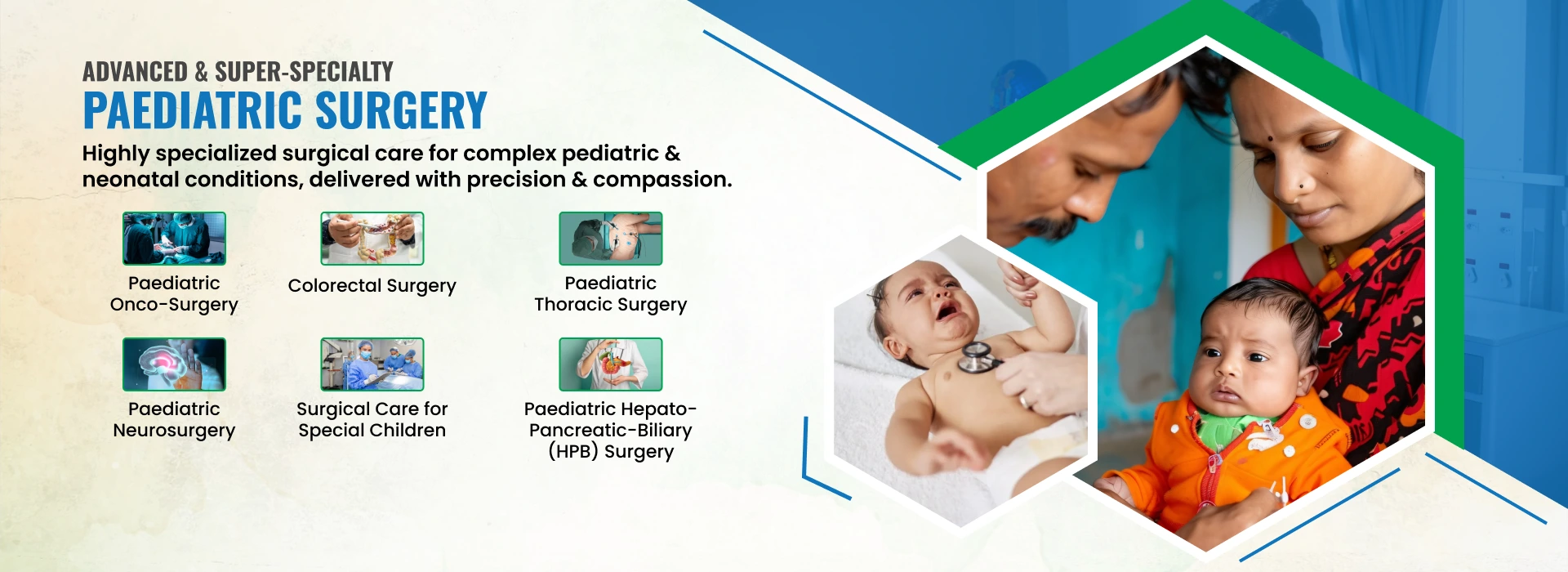
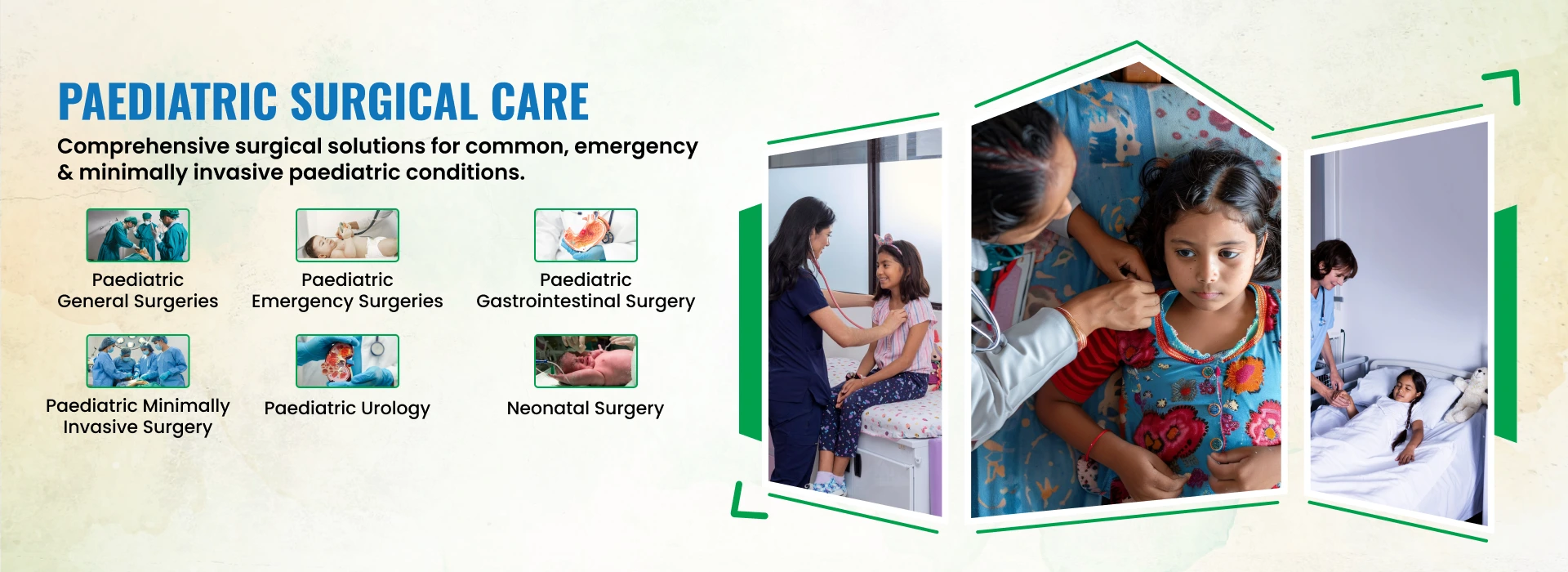
Pediatric surgeon in Bangalore

Meet Our Lead Pediatric Surgeon in Bangalore

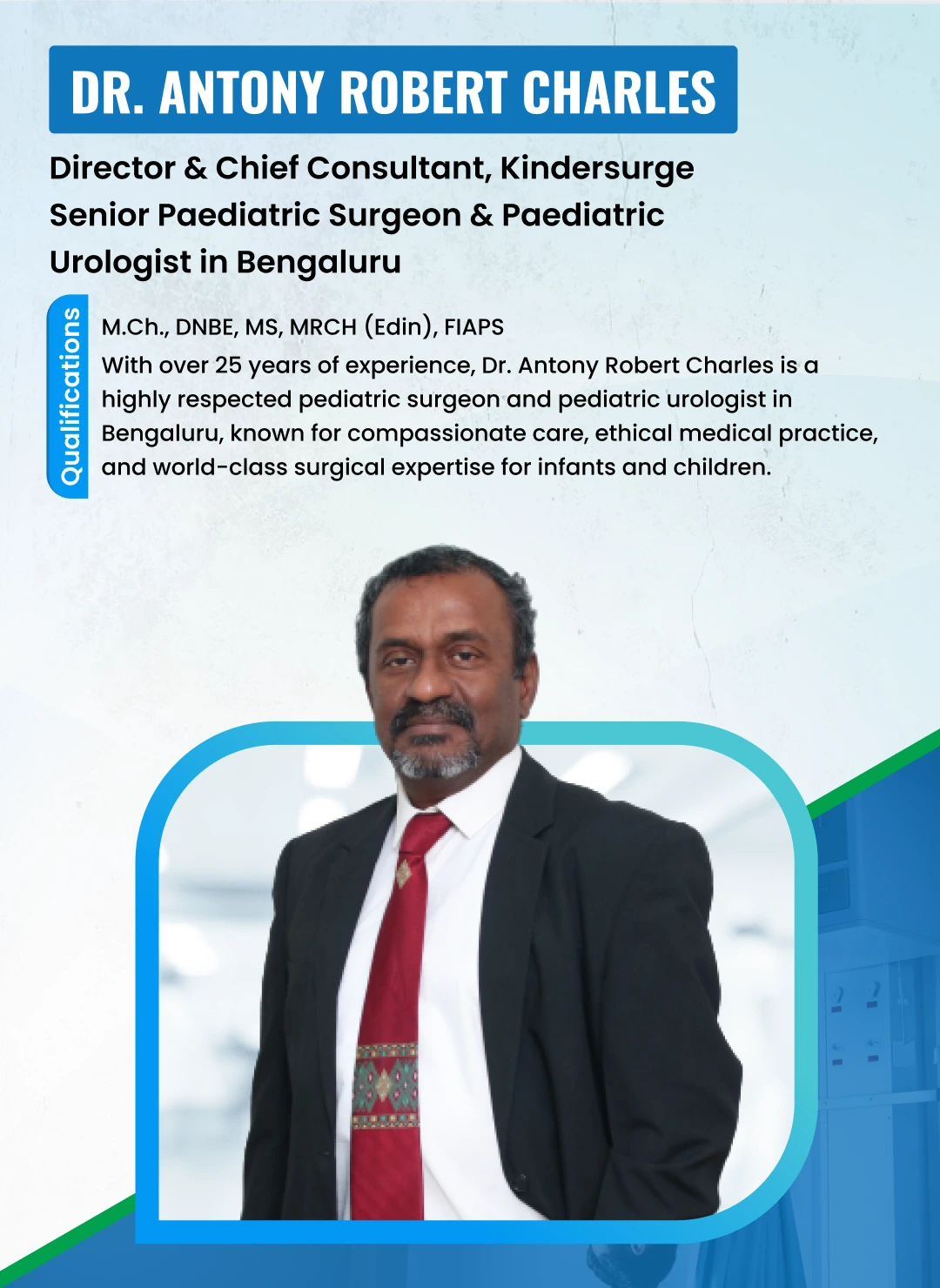
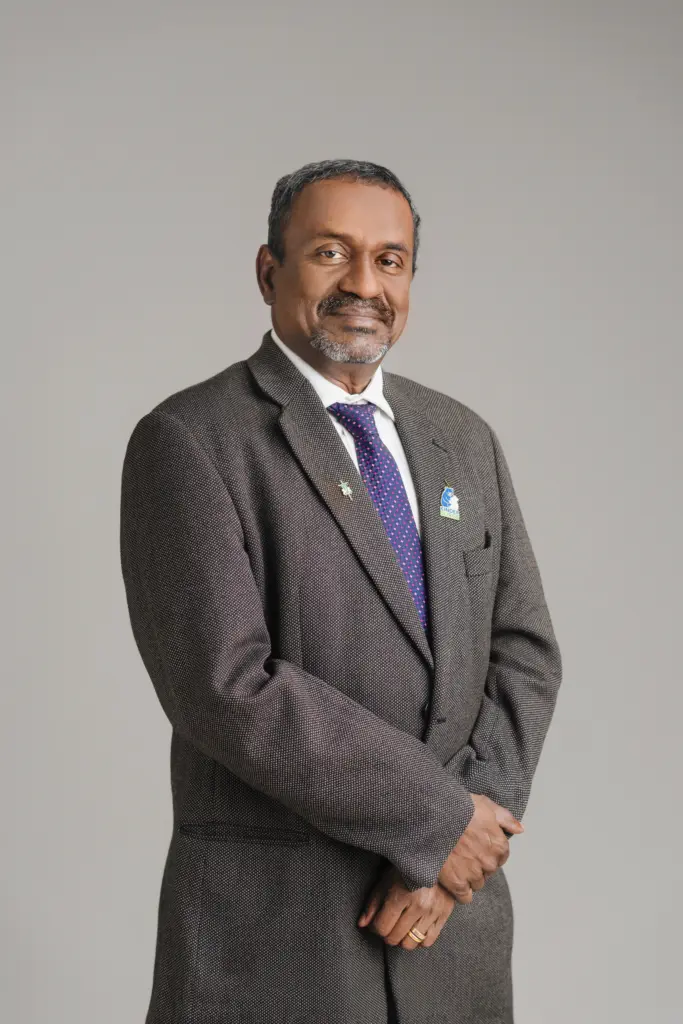
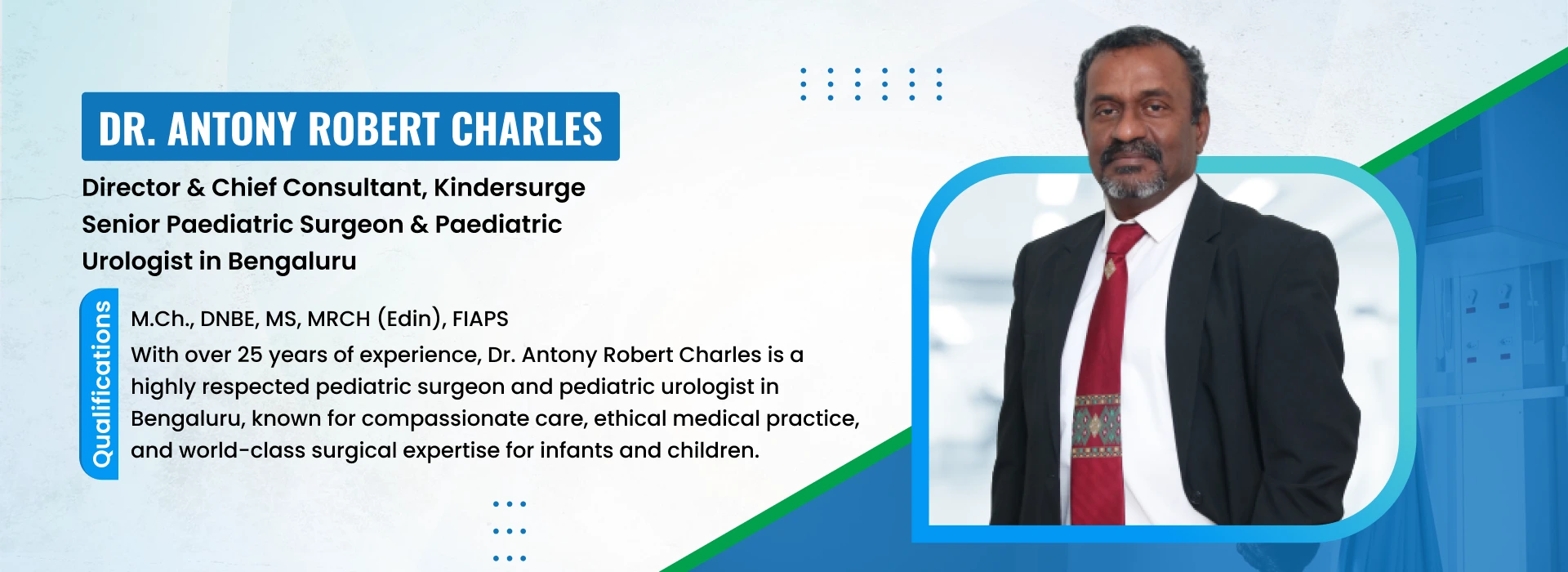
Dr. Antony Robert Charles

Director & Chief Consultant, Pediatric Surgery
Pediatric surgeon in Bangalore
Director & Chief Consultant, Pediatric Surgery

Dr. Antony Robert Charles is the Director & Chief Consultant at KinderSurge, Bengaluru, and a highly respected pediatric surgeon and pediatric urologist with over 25 years of experience. He specialises in pediatric laparoscopy, urological reconstructive surgeries, and neonatal surgical emergencies, delivering advanced, child-focused surgical care.

Internationally trained and deeply committed to ethical medical practice, Dr. Robert is known for combining clinical excellence with compassion. Beyond surgery, he is a TEDx speaker, medical ethicist, and the founder of the ChildFirst Foundation, working to ensure humane, ethical, and world-class healthcare for children.

Dr. Antony Robert Charles – Experienced Best Pediatric Surgeon in Bangalore providing expert surgical care for newborns, children, and adolescents with a compassionate, child-focused approach.

+
Years of Experience
+
Successful Surgeries
+
Children Treated
Languages Spoken
+
Years of Experience
+
Successful Surgeries
+
Children Treated
Languages Spoken

Foreign Body Bronchoscopy in Children — Bangalore's Trusted Pediatric Specialist

If your child has inhaled a small object — a peanut, seed, bead, or toy part — and is coughing, choking, or struggling to breathe, this is a medical emergency. Foreign body bronchoscopy is a safe, proven procedure where a trained pediatric surgeon uses a rigid bronchoscope to look inside your child’s airway and remove the object under general anaesthesia. Dr Antony Robert Charles, a senior pediatric surgeon in Bangalore, provides emergency and planned bronchoscopy for children of all ages — from newborns to teenagers — across Bangalore including Whitefield, Marathahalli, Koramangala, Hebbal, and Sarjapur Road. When your child cannot breathe properly, you need an expert immediately. We are here.

What Is Foreign Body Bronchoscopy in Children?

Foreign body aspiration happens when a child accidentally inhales a small object into the windpipe (trachea) or the air passages leading to the lungs (bronchi). It is one of the most common and serious pediatric emergencies in India, particularly in children between one and four years of age.

A bronchoscopy is a procedure where a doctor passes a thin, lighted instrument called a bronchoscope through the child’s mouth and into the airway to see and remove the object. In children, a rigid bronchoscope is used — it gives the surgeon a clear view and allows specialised forceps to grip and safely extract the foreign body.

This is a well-established, life-saving procedure. When performed by an experienced pediatric surgeon like Dr Antony Robert Charles, it carries very high success rates and minimal risks. Delaying treatment, however, can result in serious and permanent lung damage.

Signs and Symptoms — How Do You Know Your Child Inhaled Something?

Foreign body aspiration can be difficult to recognise because the symptoms often look like a common cold, asthma, or a chest infection. This is what makes it so dangerous. Every parent should know these warning signs. The most important clue is a sudden, severe choking episode — especially if a small object was nearby at the time.

Symptoms to Watch For

Sudden Choking Episode A sudden, severe coughing or gagging fit, often witnessed by a parent or caregiver. This is the single most important warning sign and must never be dismissed, even if the child seems to recover quickly afterward. Persistent Cough That Does Not Go Away A cough that started suddenly and has continued for hours or days without improving — and does not respond to usual medicines or home remedies. Noisy or Wheezing Breathing A high-pitched wheezing or whistling sound when the child breathes in or out. This may come from only one side of the chest, which is a particularly telling sign. Blue Lips or Fingernails (Cyanosis) Bluish discolouration of the lips, tongue, or fingernail beds is a sign of dangerously low oxygen. This is an emergency — go to the hospital immediately. Difficulty Breathing The child is visibly working hard to breathe. You may see the chest or neck pulling in with each breath, or the nostrils flaring. Recurring Chest Infections or Pneumonia Repeated lung infections, especially in the same part of the lung, may indicate a long-standing inhaled object that was not identified earlier. Change in Voice or Cry A hoarse voice or changed cry — particularly in infants — may suggest an object is near or resting on the vocal cords. Unusual Tiredness or Agitation A child who is abnormally drowsy, floppy, or extremely restless may not be getting enough oxygen and needs urgent medical evaluation.

The Silent Interval — Why Parents Often Miss It

After the initial choking episode, many children appear to recover completely and seem perfectly fine for several hours or even days. This is known as the asymptomatic or silent interval. Many parents assume the danger has passed. It has not. The object is still inside the airway and can cause life-threatening complications at any time. Always see a doctor if you suspect your child inhaled something — even if they seem well now.

Causes — What Objects Do Children Most Commonly Inhale?

Children between six months and four years explore the world by putting things in their mouths. Their airways are very small, making even tiny objects potentially dangerous. The most common causes of foreign body aspiration in Indian children include: Peanuts and Groundnuts The single most common cause of airway foreign bodies in India. Peanuts are especially dangerous because they absorb moisture, swell in size, and release irritating oils that inflame the airway — making breathing progressively worse over time. Seeds and Legumes Sunflower seeds, watermelon seeds, chickpeas, and other small, hard seeds are frequently inhaled by young children, especially during unsupervised snack times. Small Toy Parts Buttons, beads, small wheels, marbles, lego bricks, and parts from toys designed for older siblings are common culprits. Always check toy age recommendations. Coins and Small Household Objects Coins, pen caps, earring backs, and button batteries — which are also chemically dangerous — are among the most commonly encountered objects in emergency departments. Small Food Pieces Hard vegetables, bone fragments, grapes, and other firm foods can be inhaled if a child eats while running, crying, or laughing.

Who Is Most at Risk?

Children between six months and four years are at the highest risk. Boys are slightly more commonly affected than girls. Risk is highest when children are unsupervised during meal times or when older siblings’ toys are accessible. Children with neurological conditions or swallowing difficulties also face higher risk.

Emergency Warning Signs — Act Immediately

Take your child to the emergency department right now if you notice any of the following:

  • Child is completely unable to breathe, cry, or speak
  • Lips, tongue, or skin are turning blue or purple
  • Child is unconscious or not responding to you
  • Chest is silent — no breath sounds can be heard
  • Severe choking that is not getting better
  • Child is turning pale, limp, or floppy
  • High-pitched sound with every single breath
  • Child is in extreme distress or panic

In Bangalore: Call 108 immediately for emergency services. Contact Dr Antony Robert Charles directly for urgent pediatric airway consultation.

Diagnosis — How Is Foreign Body Aspiration Diagnosed?

  • Diagnosing an inhaled foreign body requires a careful combination of your child’s clinical history, a physical examination, and targeted investigations. Dr Antony Robert Charles uses the following step-by-step approach:

    Step 1 — Detailed Clinical History

    The most valuable diagnostic tool is the history. Did a parent or caregiver witness a choking episode? What was the child doing? What object might have been nearby? When did the symptoms start? This information shapes the entire decision-making process.

    Step 2 — Physical Examination

    Dr Charles carefully listens to both sides of the child’s chest with a stethoscope. Reduced or absent breath sounds on one side, or unequal air entry between the two lungs, strongly points to a bronchial foreign body.

    Step 3 — Chest X-Ray

    Most organic objects like peanuts and seeds are not visible on X-rays because they do not block X-rays. However, indirect signs — such as air trapping in one lung, lung collapse (atelectasis), or a lung infection — strongly suggest an inhaled foreign body. A normal chest X-ray does not rule out the diagnosis.

    Step 4 — CT Scan of the Chest (if indicated)

    In unclear or complex cases, a CT scan of the chest can precisely locate a foreign body, especially transparent objects that are invisible on plain X-rays.

    Step 5 — Rigid Bronchoscopy (Definitive Diagnosis and Treatment)

    When clinical suspicion is high — even if the X-ray looks normal — bronchoscopy is performed. It is both the definitive diagnostic procedure and the treatment in a single step. The surgeon sees the airway directly and removes the object. Important: A normal chest X-ray does not mean your child is safe. Many of the most dangerous inhaled objects (peanuts, seeds, plastic) are completely invisible on X-rays. If a doctor suspects aspiration, bronchoscopy must still be performed.

Treatment — How Is a Foreign Body Removed from a Child's Airway?

The only safe and effective treatment for foreign body aspiration in children is rigid bronchoscopy under general anaesthesia. There is no safe home remedy, no medicine that will dislodge an airway foreign body, and no “wait and see” approach that is acceptable. Prompt surgical removal by an experienced pediatric surgeon is essential.

Before the Procedure

Your child will be assessed by Dr Antony Robert Charles and the specialist paediatric anaesthesia team. You will be asked how long ago your child last ate or drank. Blood tests and a chest X-ray are usually performed. The entire team will speak with you, explain exactly what will happen, and answer every question you have before you are asked to sign consent. You will never be kept in the dark.

During Rigid Bronchoscopy — Step by Step

Step 1 — General Anaesthesia Your child will be given a general anaesthetic and will be completely asleep. They will feel nothing and remember nothing from the procedure. A specialist paediatric anaesthetist monitors your child continuously throughout. Step 2 — Insertion of the Bronchoscope Dr Charles carefully passes the rigid bronchoscope through your child’s mouth and past the vocal cords into the windpipe (trachea). The bronchoscope carries a light and camera so the surgeon has a clear, magnified view of the entire airway. Step 3 — Locating the Foreign Body The surgeon advances into the right or left bronchus — the air passages leading to each lung. The right bronchus is more commonly affected because of its anatomical angle. The foreign body is identified by direct vision. Step 4 — Removal with Optical Forceps Specialised optical forceps are passed through the bronchoscope. The surgeon grips the object firmly and extracts it safely under direct vision. Once the object is removed, the entire airway is inspected carefully to ensure no fragments remain. Step 5 — Safe Recovery Your child is moved to the recovery room and wakes up with a nurse present at all times. Most children recover from the anaesthetic within one hour and are alert and asking for water or food shortly after.

How Long Does the Procedure Take?

Most foreign body bronchoscopy procedures take between 30 minutes and one hour. Complex cases — where the object is deeply lodged, fragmented, or has caused significant inflammation — may take longer. Recovery from anaesthesia takes an additional one to two hours.

Recovery — What to Expect After Bronchoscopy

Most children recover quickly and completely after foreign body bronchoscopy. Knowing what to expect will help you feel more prepared and less anxious during what is already a stressful time.

Hospital Stay

For uncomplicated cases, children are observed in hospital for 24 to 48 hours after the procedure. If there was significant lung infection, collapse, or an abscess, a slightly longer stay is required.

Mild Cough After the Procedure

Some coughing in the one to two days following bronchoscopy is completely normal. The airway has been irritated by both the foreign body and the procedure itself. This will settle on its own.

Medications

Dr Charles may prescribe a short course of antibiotics if there was any associated infection, and nebulisation therapy to help reduce airway swelling and improve breathing comfort.

Feeding and Diet

Most children can resume normal feeds within a few hours of waking from the anaesthetic. Soft foods are recommended for the first day if there is any throat or voice soreness.

Going Home

Once your child is eating comfortably, breathing well, has no fever, and the team is satisfied with recovery, they are ready to go home. Dr Charles will give you a clear written discharge plan and instructions.

Follow-Up Appointment

A follow-up chest X-ray is usually done before discharge. Dr Charles will see your child again in the outpatient clinic within one to two weeks to confirm complete recovery and lung clearance.

When to Seek Help After Going Home

Return to the emergency department or contact Dr Charles immediately if your child develops a fever above 38.5°C, increasing difficulty breathing, a worsening cough, or any new concerning symptoms after going home. These may indicate a secondary infection that needs prompt treatment.

📞 Book a Consultation with Dr. Antony Robert Charles — Pediatric Urologist, Bangalore

Your child’s urinary health cannot wait. Neither should you. Whether you’re in Whitefield, Koramangala, Marathahalli, Hebbal, or Sarjapur Road — expert, compassionate pediatric urology care is available for your family.

What to Expect at Your First Visit:

✔ Thorough history and physical examination ✔ Clear explanation of your child’s condition in simple language ✔ A personalized investigation and treatment plan ✔ Honest, evidence-based advice — no unnecessary procedures ✔ Time for all your questions to be answered

📅 Appointment Options:

  • In-Person Consultation — Bangalore clinic (address on contact page)
  • Teleconsultation — Available for initial queries and follow-ups
Emergency Contact — For urgent urological concerns

Serving Families Across Bangalore

Dr Antony Robert Charles provides pediatric bronchoscopy and emergency airway care to families across all major areas of Bangalore. No family should have to travel excessively in an airway emergency.

Whitefield and Marathahalli

Families living in Whitefield, Marathahalli, and along the Outer Ring Road corridor — among the fastest-growing residential areas in Bangalore — have access to expert pediatric surgical care from Dr Antony Robert Charles without needing to travel to the city centre. Emergency availability means help is always close.

Koramangala and HSR Layout

Parents in Koramangala and HSR Layout can access prompt pediatric bronchoscopy consultations and emergency airway services. Dr Charles is affiliated with leading hospitals that are accessible from South Bangalore with minimal travel time.

Hebbal and North Bangalore

Families in Hebbal, Yelahanka, and surrounding north Bangalore areas are served with the same level of expert emergency care. Geographic distance is never a barrier to receiving world-class pediatric airway surgery in Bangalore.

Sarjapur Road and Electronic City

The rapidly growing Sarjapur Road and Electronic City corridor is home to thousands of young families. Dr Antony Robert Charles ensures this community has access to a trusted, experienced pediatric surgeon for both routine consultations and life-threatening airway emergencies.

Also Serving

Indiranagar, Jayanagar, JP Nagar, Banashankari, Bellandur, Varthur, K R Puram, Rajajinagar, Malleshwaram, and all surrounding areas of Bengaluru.

Frequently Asked Questions:

What is foreign body bronchoscopy in children?

Foreign body bronchoscopy is a procedure used to remove an inhaled object from a child’s airway using a rigid bronchoscope under general anaesthesia. It is the safest and most effective treatment for airway foreign bodies in children.

How do I know if my child inhaled something?

Warning signs may include:

  • Sudden choking episode
  • Persistent coughing
  • Noisy or wheezy breathing
  • Difficulty breathing
  • Blue lips or fingernails

Seek medical attention immediately if you suspect inhalation of any object.

Is bronchoscopy safe for babies and toddlers?

Yes. Pediatric bronchoscopy performed by experienced surgeons and pediatric anaesthesia teams is considered very safe, even in infants and toddlers.

How long does a bronchoscopy take?

Most bronchoscopy procedures take between 30 minutes and one hour. Recovery from anaesthesia usually takes another one to two hours, and most children stay in the hospital for 24–48 hours.

My child swallowed something. Is that the same as inhaling it?

No. Swallowed objects enter the digestive tract, while inhaled objects enter the airway and lungs. Both conditions are serious but require different procedures and treatments.

What objects do children most commonly inhale?

Common inhaled objects include:

  • Peanuts and groundnuts
  • Seeds
  • Small toy parts
  • Coins
  • Pen caps
  • Beads

What should I do if my child is choking right now?

Call emergency medical services immediately if your child cannot breathe, cry, or speak. Use age-appropriate choking first aid techniques and go to the nearest emergency department without delay.

Can an inhaled foreign body cause long-term damage?

Yes. If left untreated, inhaled foreign bodies can cause recurrent lung infections, lung collapse, airway scarring, or permanent lung damage. Early removal usually results in full recovery.

Does a normal chest X-ray mean my child is safe?

No. Many inhaled objects such as peanuts, plastic, or seeds may not appear on an X-ray. Persistent symptoms still require evaluation by a pediatric specialist.

How much does pediatric bronchoscopy cost in Bangalore?

The cost depends on the hospital, complexity of the procedure, hospital stay, and ICU requirements if needed. Insurance and cashless treatment options are commonly available.
Patient Education

Evidence-Based Insights for Parents

Pediatric Consultant

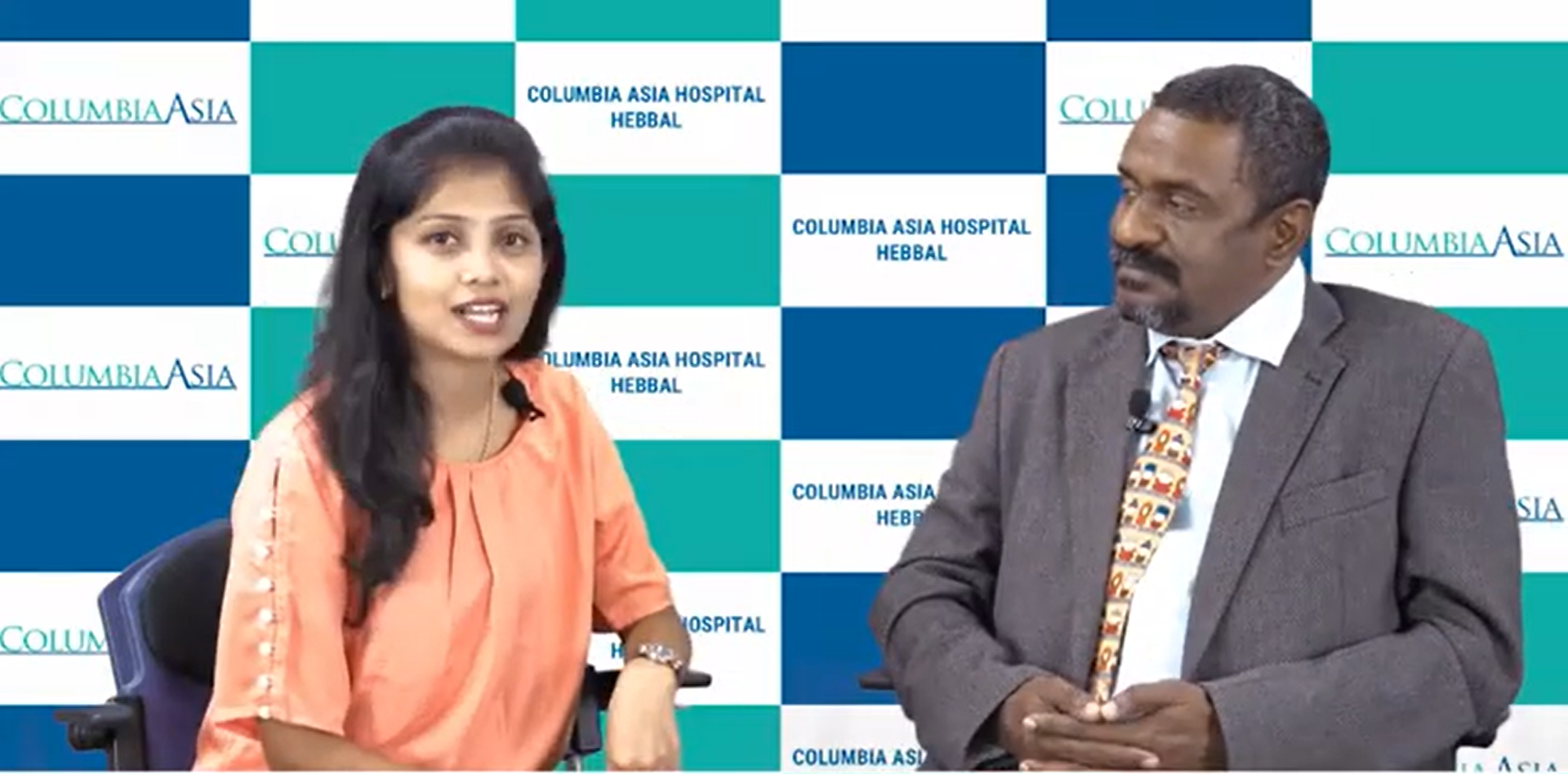
Dr. Antony Robert Charles Discusses Surgery in Children

Get more info

EMERGENCY CALL

Get a helpful insight

Read Out The Blogs

Health Tip

Little Tips for Big Health

Dr. Antony Robert Charles

4 Videos

Why Choose Dr Antony Robert Charles for Pediatric Bronchoscopy in Bangalore?

When your child cannot breathe properly, the experience and skill of the surgeon matters above everything else. Here is why families across Bangalore trust Dr Antony Robert Charles.

Specialist in Pediatric Airway Surgery Dr Charles has dedicated his career to pediatric surgery with specialised expertise in airway emergencies, foreign body removal, and rigid bronchoscopy in children of all ages — from premature newborns to teenagers.

Extensive Experience in Foreign Body Bronchoscopy He has performed a large number of foreign body bronchoscopies in children across Bangalore and Karnataka, including complex cases involving deeply lodged objects, fragmented foreign bodies, and children with associated lung infections.

Expert Paediatric Anaesthesia Partnership Every bronchoscopy is performed in partnership with a specialist paediatric anaesthesia team — ensuring your child’s safety and comfort throughout the procedure.

24/7 Emergency Availability Airway emergencies do not follow office hours. Dr Charles is available around the clock for emergency bronchoscopy consultations and procedures across Bangalore.

Parent-Centred Compassionate Care Dr Charles understands that parents are frightened and anxious when their child faces an airway emergency. He takes the time to explain everything clearly, answer every question honestly, and involve families at every step of their child’s care.

Affiliated with Leading Bangalore Hospitals Dr Charles operates at reputed hospitals across Bangalore equipped with state-of-the-art pediatric surgical infrastructure, dedicated paediatric intensive care, and experienced nursing teams.

Serving All of Bangalore From Whitefield to Hebbal, Koramangala to Sarjapur Road — Dr Charles ensures that expert pediatric airway care is accessible to every family in Bangalore regardless of where they live.